
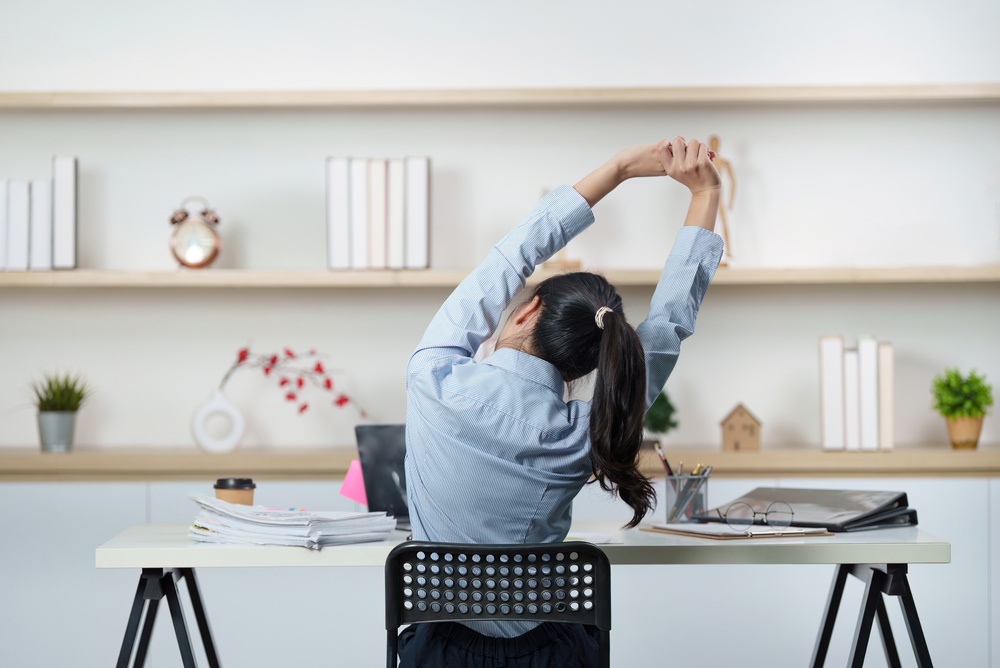
Sitting at a desk for hours can leave your neck stiff, your shoulders raised, and your lower back sore. Your hips may also feel tight when you stand up. A short daily decompression routine can help your body move after being in one position for too long. You do not need special equipment. All you need is a safe space and about five to ten minutes for gentle movement.
Begin With Slow Breathing
Sit near the edge of your chair with both feet flat on the floor. Let your hands rest on your legs. Slowly breathe in through your nose and let your belly expand. Breathe out through your mouth and allow your shoulders to drop. Repeat this five times. Try not to force a very deep breath. The goal is to slow down and notice where your body feels tense. This simple breathing exercise helps your muscles relax before you begin moving. It can also release some of the upper-body tension that builds while you work.
Release Your Neck and Shoulders
Keep your back tall and look straight ahead. Slowly tilt your right ear toward your right shoulder. Hold the position for about 15 seconds, then repeat on the other side. Next, make five slow shoulder circles toward the back. Finish by gently pulling your shoulder blades down and toward each other. Do not lift your chest too high or squeeze hard. These movements can ease a stiff neck and help the shoulders move out of the raised position they often hold while typing. Stop if you feel sharp pain, numbness, or a strong pulling feeling during the shoulder stretch.
Open Your Chest
Stand and place your hands behind your lower back. Hold one wrist, or simply keep your hands close together if reaching is hard. Move your shoulders back while keeping your ribs relaxed. Hold for 15 to 20 seconds and breathe normally. You can also stand in a doorway with one forearm resting against each side. Take one small step forward until you feel a light stretch across the front of your body. This chest stretch can help balance the rounded posture caused by leaning toward a screen. It may also make it easier to keep an upright posture without forcing your shoulders back.
Move Your Spine Gently
Sit with your feet planted on the floor and your hands resting on your thighs. As you breathe in, lift your chest slightly and allow your lower back to form a small curve. As you breathe out, round your back and let your chin move toward your chest. Move between these two positions five to eight times. Keep the motion slow and stay within a comfortable range. This chair version of cat-cow helps your spine move after long periods of sitting. It can also reduce the rigid feeling that develops through the middle and lower back during the workday.
Stretch Your Hips
Stand behind your chair and hold it for support. Step your right foot back while keeping both feet pointed forward. Bend your front knee slightly and keep your upper body tall. Move your hips forward until you feel a light stretch at the front of the right hip. Hold for about 20 seconds, then switch sides. Avoid bending your lower back to create a deeper stretch. Long periods of sitting can make the hip flexors feel short and tight. Releasing them may help you stand straighter and reduce some of the strain placed on your lower back.
Wake Up Your Legs
Stand tall and slowly rise onto your toes. Lower your heels and repeat the movement ten times. Next, hold your chair and bend one knee, bringing your heel toward the back of your leg. Return your foot to the floor and switch sides. Complete five bends on each leg. Finish by walking around the room for one or two minutes. These movements wake up the leg muscles and give your joints a break from the seated position. A short walk also encourages healthy circulation after your legs have been still.
Make Movement Part of Your Workday
This routine can help, but it cannot fully undo eight hours of sitting by itself. Try to stand, walk, or change positions every 30 to 60 minutes. You can take a phone call while standing, refill your water, or walk across the room between tasks. Small movement breaks are often easier to follow than one long workout. They also keep desk-related stiffness from building throughout the day. Set a quiet reminder if you tend to lose track of time while working.
If tightness keeps returning or makes it hard to move, guided stretch therapy in Metairie may help. NOLA Stretch provides personalized care based on how your body feels and moves. Schedule an appointment today to loosen tight areas, improve your mobility, and feel more comfortable at work.